
What Are the Key Benefits of Horizontal Directional Drilling?
Underground infrastructure is the backbone of modern life. Pipelines, fibre optic cables, water mains, and energy conduits all run beneath our feet, largely invisible and often taken for granted. But installing and maintaining that infrastructure is anything but simple.
For decades, the default method was open-cut trenching: disruptive, costly, and increasingly incompatible with the demands of urban environments and environmental regulation.
Today, horizontal directional drilling (HDD) has become the method of choice for a growing number of engineers and project owners, and in this article, we’re digging deep beneath the surface to uncover why.
What Is Horizontal Directional Drilling?
Horizontal directional drilling is a trenchless installation method that uses a steerable drilling rig to create underground bores along a pre-planned path, without the need for surface excavation. A pilot hole is drilled first, then progressively reamed out to the required diameter, before the product pipe or cable is pulled back through.
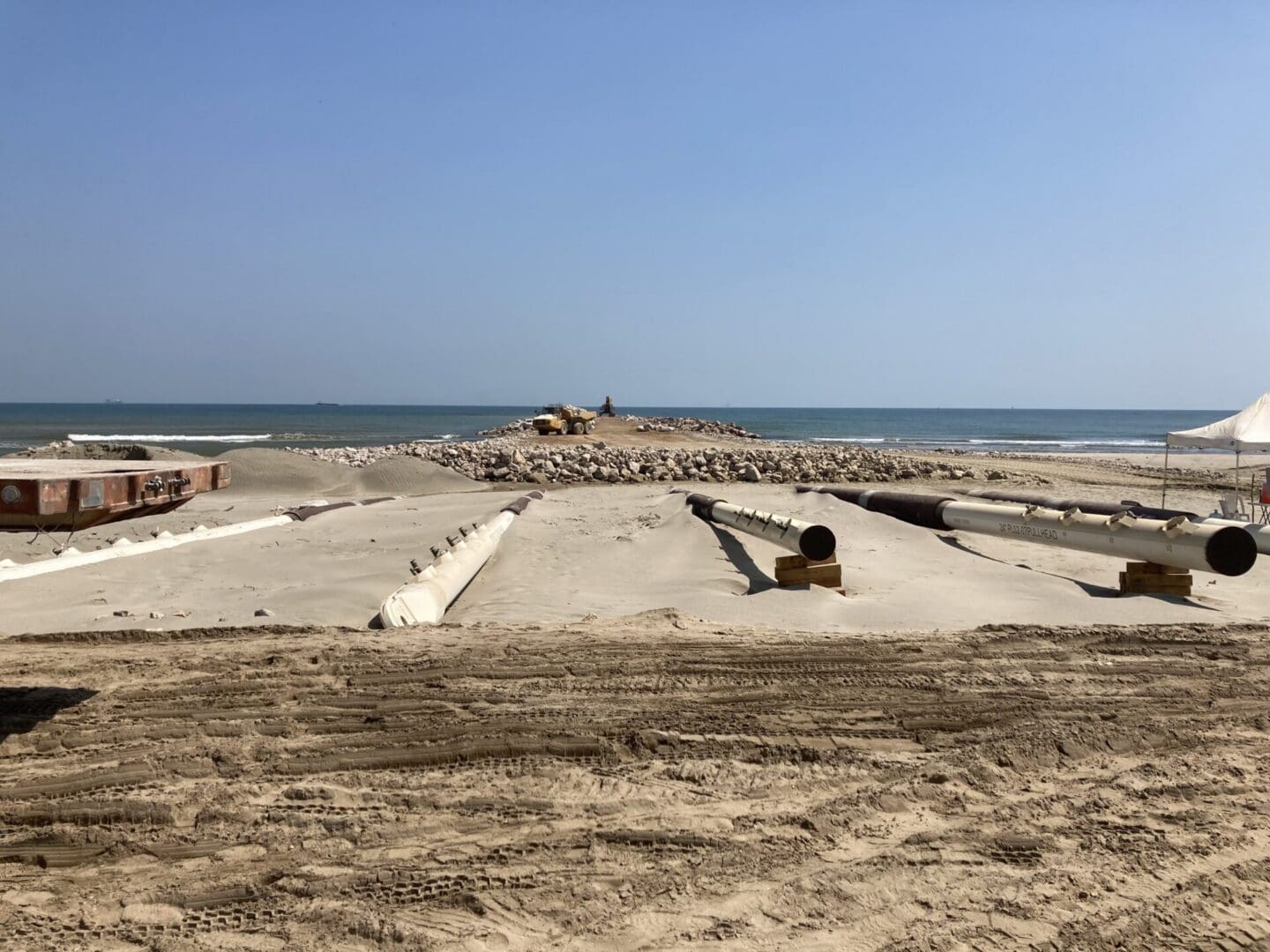
Prime Horizontal has been at the forefront of HDD guidance since the company's earliest days, building an international reputation for delivering on the most technically demanding projects across oil and gas, telecoms, water, and renewables. The global HDD market was valued at over $10 billion in 2024 and is projected to reach nearly $19 billion by 2032, a reflection of the industry’s appetite for trenchless methods.
The Key Benefits of Horizontal Directional Drilling
1. Minimal Surface Disruption
The most immediate benefit of horizontal directional drilling is what it doesn't do. Unlike open-cut methods, HDD leaves roads, pavements, landscaping, and waterways largely intact. For urban infrastructure projects, this is transformative. Traffic isn't stopped. Businesses aren't cut off. Communities aren't left living next to open trenches for weeks on end.
HDD is particularly valuable in urban environments and across obstacles like roads, railways, and water bodies – which are precisely the scenarios Prime Horizontal's engineers encounter every day.
With locally-based teams across Europe, North America, Australia, and Southeast Asia, Prime Horizontal brings that expertise directly to site, wherever the project is.
2. Reduced Environmental Impact
Environmental compliance is a key driver of project approval and public trust. HDD answers that pressure directly. Studies comparing open-cut and horizontal drilling methods indicate a 65% lower environmental impact for horizontal drilling, making it significantly more sustainable across sensitive ecosystems, riverbanks, and protected land.
Environmental concerns and regulatory requirements have driven the adoption of HDD as a preferred method for installing pipelines and cables without causing significant surface disruption or ecological damage.
Prime Horizontal's engineers understand this responsibility, and their in-house training ensures every project is delivered with environmental care built in from the planning stage.
3. Greater Precision on Challenging Projects
Not all HDD projects are straightforward, and this is where expertise truly proves its value. Prime Horizontal was founded on this principle.
One of the most common challenges on complex HDD projects is the communication gap between on-site operations and office management. Delays in relaying critical information can be costly, and that is exactly why Prime Horizontal developed ProData.
Custom-designed and purpose-built specifically for the HDD industry, ProData measures and transmits drilling parameters including push, pull, torque, mud pressure, and rotation speed directly to both rig operators and office teams in near real time. It includes real-time graphical representations of drilling parameters measured every 3 seconds. The people making decisions always have the clearest possible picture.
Prime Horizontal has also pioneered the drilling of underground intersects, which are some of the most technically demanding applications in HDD, with great success.
That's the product of decades of in-house expertise and engineers who've solved problems time and time again.
4. Efficiency Over the Project Lifecycle
While HDD setup costs can be higher upfront than open-cut alternatives, the total project economics typically favour trenchless methods. The absence of road reinstatement, surface restoration, traffic management, and extended site duration all reduce overall spend. There's also less risk of damage to existing buried services, a common source of significant unforeseen costs on conventional excavation projects.
Technological advancements in HDD equipment, such as enhanced torque capacity, real-time monitoring systems, and advanced drill heads, have improved operational efficiency and reduced project timelines. Prime Horizontal's investment in proprietary technology is a direct reflection of this, giving clients more predictable delivery and fewer surprises on site.
The Bottom Line
Horizontal directional drilling has earned its place as the leading method for underground infrastructure installation because when it's executed well, it delivers better outcomes across every measure: environmental, commercial, and technical.
Prime Horizontal has spent decades making sure it's executed well. From guidance technology and in-house engineer training to a global network of locally based experts, we bring a breadth of expertise to any project.
For a reliable team backed by decades of HDD field experience, partner with Prime Horizontal for your next project.